Jin Mao Tower, Shanghai


The Jin Mao Tower, a technological wonder, offers fantastic views of the Huangpu River and Pudong district. It also offers a great view of the Oriental Pearl TV Tower. Adrian D. Smith fused the conventional components of Chinese culture with the modern architectural style to give it a distinguished look. With the use of modern engineering techniques, the building of the tower has been made resistant to both the high-speed winds of about 200 km/h and earthquakes measuring intensity up to 7 on the Richter scale. The swimming pool on the 57th floor of the Jin Mao Tower works like a passive damper.


The building is home to the renowned Grand Hyatt hotel and several offices. The large lobby on the 1st and 2nd floors serves as a venue for business meetings. The spaces in the 3rd on the 50th floor are filled with modern offices. The 51st and 52nd floors are occupied by mechanical and electrical service sections. The space from the 53rd to 87th floor is rented to the 5 Star Hotel Grand Hyatt. The hotel offers 555 opulent rooms for accommodation. The last floor of the tower serves as a vantage point. It has the capacity to accommodate 1,000 people.

The parking space can accommodate 800 cars and 2,000 bicycles in the basement. It is completely secured due to the installation of hidden surveillance cameras.


source from: mapsofworld

Great Wall , China


The Great Wall of China is a long man-made wall built using tamped earth, brick, stone, wood, and other materials. The purpose of building the Great Wall of China was to keep out invaders and check military intrusions. It now acts as a tribute to the Chinese who were responsible for building this wall. The wall runs from Shanhaiguan in Hebei province (in the east) to Jiayuguan in Gansu province (in the west). It comprises of walls, armories, barracks, stables, shelters on the wall, watch towers, horse tracks, forts and passes.

To ensure proper communication among the army units, several signal towers were constructed on the hilltops or other higher positions along the wall. The wooden gates were used as a trap against those who stealthily tried to pass.

People from different occupations built the Great Wall during the three dynasties namely, Qin, Han and Ming. The most well-preserved version of the site dates back to the Ming dynasty.


UNESCO recognized it as a World Heritage Site in 1987, and people from all over the world visit the region to get to walk on the Great Wall of China. The site has been protected so that future generations are able to enjoy it with the same amazement as we do now. Despite the restoration of the Great Wall, which has made visiting more convenient, it is still dangerous to hike in the region due to the lack of safety facilities.

There are many watchtowers along the Great Wall, which are spaced a kilometer or several kilometers apart. The watchtowers are two stories tall. There are more than 10,000 watchtowers and beacon towers along the site.


source from: mapsofworld

Li River Cruise , China


Li River cruise from Guilin to Yangshuo is one of the most famous journeys in the world. Choosing this cruise would highlight your trip to China by showing you the impressive landscapes that the region boasts. The river journey is supposed to be 4-6 hours (depending on the weather conditions) and is more than 52 miles long. A reverse cruise upstream from Yangshou to Yangdi was introduced this year. Choosing this new option would enable you to shorten the time of the cruise by approximately 2-3 hours.

This journey would allow you to see peaks and villages with interesting names along the river while listening to the tour guides narrating stories about various famous places. The most spectacular part of the journey is between Yangdi and Xingping providing you with beautiful memories that can be cherished forever.


It is essential that you enquire about the boat thoroughly and ask for photos prior to paying for the boat. There are plenty of options to pick from so you would want to be sure about whether or not your expectations are being met. The boats vary from luxury cruises to Bamboo Boats with none of them being allowed to carry passengers on their way back to Guilin. You could be sitting in the comfort of your cabin or alternatively enjoying the outdoors depending on your budget and preferences. Be sure to bring a camera along because the sceneries are said to be photographers’ dream. When the cruise ends in Yangshou, you should be prepared to walk to the famous Wall Street since the wonderful hotels, cafes and restaurants there would allow you to explore the life in China. This little county of Yangshou is also a good place for hiking, cycling or walking.


source from: mapsofworld

Eastern Qing Tombs , China


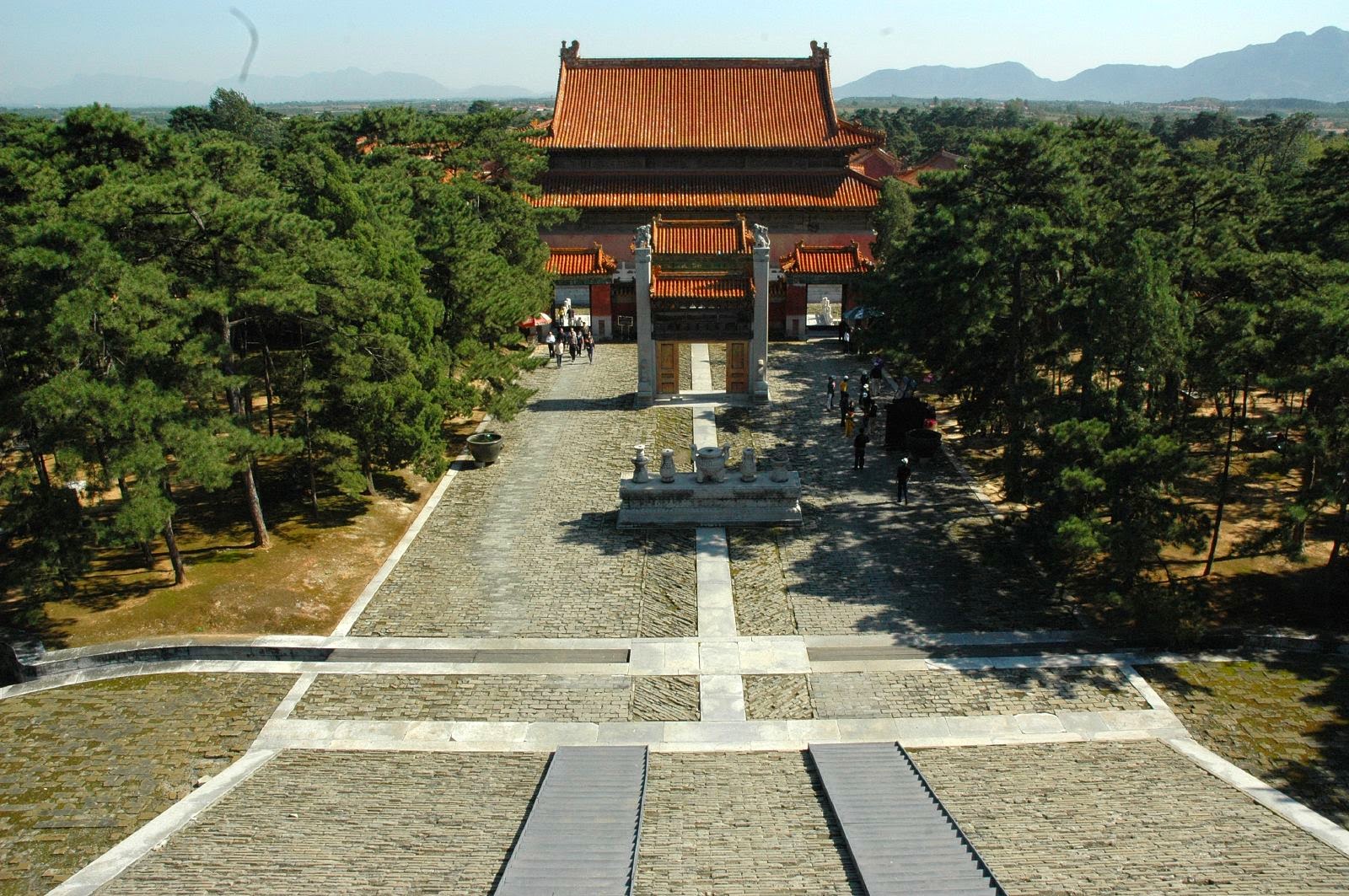
The Eastern Qing Tombs make up an imperial mausoleum complex from the last feudal empire in China, the Qing Dynasty (1644-1911). This sacred burial ground is located near Beijing in Zunhua, Hebei Province. Most of the tombs at Eastern Qing are open to the public.

The Eastern Qing Tombs are the final resting place of 5 emperors: Shunzhi, Kangxi, Qianlong, Xianfeng, and Tongzhi. In addition, there are also empresses, imperial concubines, princes, and princesses, all from the Qing Dynasty buried in the tombs. Their positioning within the tombs shows their relationships and the hierarchy of rulers and heirs, laid out in a branch-like system.


The largest and most elaborate tomb, and the focal point of the whole site is called Xiaoling, which houses the remains of the Emperor Shunzhi. He was the first Qing ruler, and his position in the mausoleum shows his exalted status. The Emperor Qianlong has a tomb that covers half a square kilometer, and is decorated with Tibetan and Sanskrit sutras, and bas-relief art.

The Empress Dowager Cixi has a tomb called Dingdongling, which was completed long before her death. The tomb features a depiction of a phoenix above a dragon – symbols representing the Empress and Emperor respectively.


source from: mapsofworld

Tiananmen Square, Beijing , China


The third-largest city square in the world, Tiananmen Square is a historic site, remembered for many protests that took place in the square, like the pro-democracy protests of 1989 resulting in hundreds of deaths. It is surrounded by important buildings including the National Museum of China, the Great Hall of the People, and the Mausoleum of Mao Zedong. Tiananmen Square is separated from the Forbidden City by the Tiananmen Gate.

The Forbidden City, known officially as the Imperial Palace, served as an extravagant home of the emperors of China for about 600 years. Today, the Forbidden City is open to visitors, who can view historical exhibits inside the palace, but while the Imperial Palace was in use, commoners could not approach the building, hence the name, Forbidden City.

The Tiananmen Gate was constructed in 1415 during the reign of the Ming dynasty. Following the demise of the Ming dynasty, the fights between Li Zicheng and the early Qing emperors resulted in demolition of the gate.


The Tiananmen Tower, built in 1417, was primarily used for the announcement of a big ceremony to the common people, particularly about the crowning of the new emperor and the empress. After the demise of the last feudal kingdom, the entry of the common people into the tower was restricted. As a result, only the royal family and aristocrats could enter into the tower.

The Tiananmen Square was built in 1651, and since then it has seen several renovations. The remarkable renovation took place in the 1950s, when the square was enlarged to four times its original size.

One of the largest monuments in China, the granite ‘Monument to the People’s Heroes’, was built in 1952 at the southern side of the square.


source from: mapsofworld
 
Copyright © 2013. PLACES-CITY - All Rights Reserved